All SpeedRunners 2 Maps: 8 Maps, 16 Layouts Explained
SpeedRunners 2 launches with 8 maps and 2 layouts each. Learn the mechanics that shape every track: booster pads, grapple ceilings, levers, wall jumps and obstacles.
FAQ
How many maps are in SpeedRunners 2 at launch?
Do original SpeedRunners maps return in the sequel?
Which SpeedRunners 2 maps are officially named?
What do levers do on SpeedRunners 2 maps?
What are the blue ceilings on the maps?
SpeedRunners 2’s maps are described by the developers as meticulously designed — and they mean it literally: the skill ceiling of the game isn’t in your character, it’s in your knowledge of eight maps and the two ways each one races. Sixteen layouts is the entire competitive landscape at launch, which is exactly small enough to master and exactly deep enough to be worth mastering.
This page explains the system every map is built from. Individual map pages follow one by one as each is verified against the live build — same rule as everywhere on this wiki: published when verified, dated always.
The Maps Official Channels Have Named
The complete launch-eight list is still being verified against the live build — but official channels have named four maps outright, all of them new, and Steam’s own achievement data has since confirmed four maps by name, three of them returning originals with pages below:
| Map | Status | What official sources say |
|---|---|---|
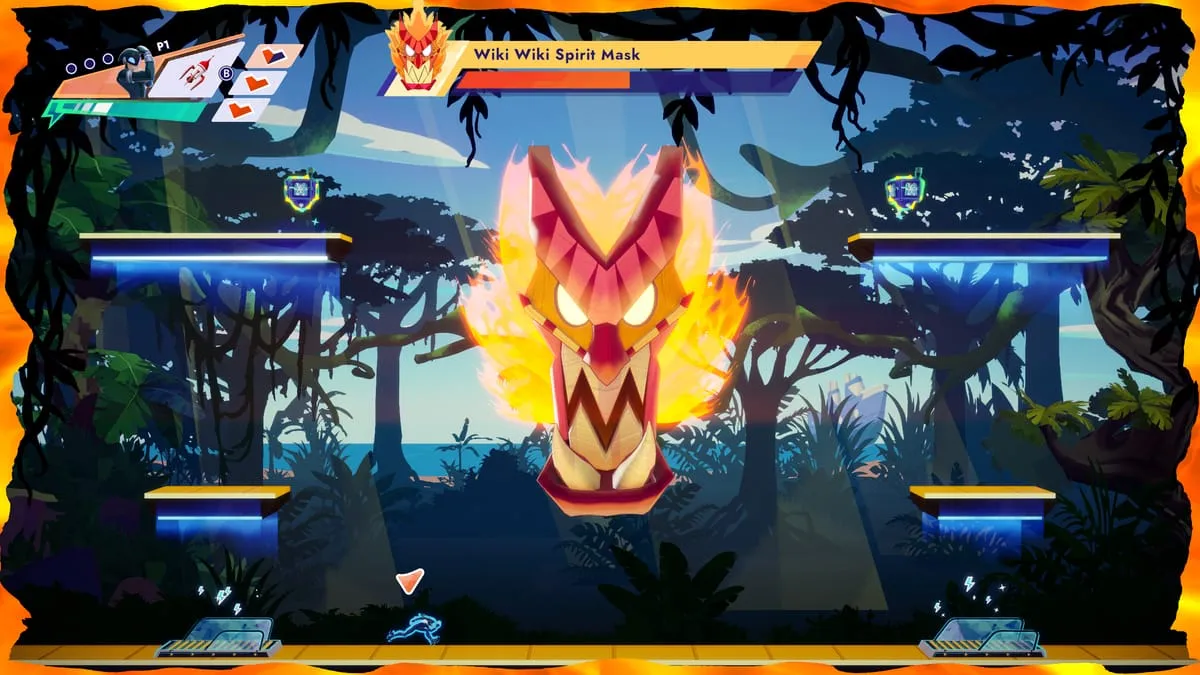
| Forest | New | Official account: “a new map based on a popular community-made level from the original SpeedRunners”; a separate official post describes it as “based on the rainforests of Costa Rica” |
| Museum | New | Named by tinyBuild among “3 brand new maps: Museum, Moon, and Forest” |
| Moon | New | Named in the same official list |
| Secret Lab | New (availability tracked) | Revealed by the official account ahead of the February 2026 demo: “First look at a brand-new map: Secret Lab” |
The same tinyBuild statement adds that the game has “alt layouts for each map, including the classic ones” — the official wording behind this page’s two-layouts section.
Returning maps, now confirmed (September 15, 2026): Steam’s global achievement API carries the game’s four hidden achievements under internal names — SECRETS_METRO, SECRETS_MUSEUM, SECRETS_CASINO, SECRETS_SSROYALE — per-map secret achievements that put Metro, SS Royale and Casino alongside Museum in the live build’s own data. Community trackers additionally cite the winter-setting Swift Peaks and Genetics as present — and Swift Peaks is itself a course in the original game’s sixteen-map list, which makes the sighting consistent if still unconfirmed here; those two names join this table once verified against the live game. The achievements guide covers the hidden four in full.
The returning originals, each with its own page:
| Map | Confirmed by | Original-game record |
|---|---|---|
| Metro | SECRETS_METRO in the live build’s data |
A beginner course — “run in and around New Rush City’s Central Station” |
| Casino | SECRETS_CASINO in the live build’s data |
An Expert-tier course in the original’s sixteen-map list |
| SS Royale | SECRETS_SSROYALE in the live build’s data |
“A cruise ship filled with switches” — the original’s first switch map |
The System: Six Mechanics Make Every Map
Every SpeedRunners 2 track is assembled from the same vocabulary. Learn the six pieces once and every map becomes readable at a glance:
| Mechanic | What it does | What it rewards |
|---|---|---|
| Booster pads | Speed strips on the track | Knowing the racing line — the fast route strings pads together |
| Blue ceilings | Grapple-able ceiling sections | Aerial lines — swing over the floor route with the grapple |
| Wall-jump sections | Vertical shafts of sequential jumps | Rhythm — hesitation at the wall costs the pack |
| Levers | Open and close pathways mid-race | Map memory — the route you get depends on who flips what, when |
| Obstacles | Hazards and barriers | Clean, low movement — slides and late jumps |
| Pick-up placement | Items seeded along the route | Positioning — front-runners defend, chasers arm up |
The genius of the design is the interaction: a lever that closes the floor route shoves the race toward the blue ceiling, where whoever grapples cleanest wins the split. You’re not learning sixteen layouts — you’re learning six mechanics and how each map pairs them.
Two Layouts Per Map: What “Two Ways to Race” Means
Each of the eight maps ships with two layouts — two configurations of the same terrain. In practice that means a map you think you know can still surprise you: the lever routes differ, the pick-up seeds differ, and the fast line you memorized may simply not exist in the other configuration.
Three practical consequences:
- Check which layout loaded. The differences are exactly the kind of detail that decides races; layout-blind confidence is how practiced players lose to strangers.
- Learn layouts in bot races. Free, offline, repeatable — the fastest way to burn both configurations of a map into memory (see the beginner routine).
- Rotation is the real test. Online play rotates the whole pool; being world-class on one layout of one map is a party trick, not a win condition.
Returning Maps From the Original
The official FAQ confirms some original SpeedRunners maps return in the launch eight — and Steam’s achievement data now names three of them plus Museum outright (Metro, SS Royale, Casino; see the table above). For veterans this is pure profit: the 2016 game’s map knowledge partially transfers, and slope-jump and grapple routes that took years to discover in the original are live ammunition here. For newcomers it’s a curiosity — and a warning that some opponents know these streets already.
More maps are committed via the update cadence — tinyBuild ships patches every one to two months, and the FAQ notes more maps arrive over time, including popular Workshop maps “with a fresh coat of paint” (Forest is the first evidence of that policy). A map editor and Steam Workshop support are things the team “would love to” do but are not in the launch game; if that changes, the map layer of this wiki grows with it.
How to Actually Learn a Map
The routine that works, in order:
- Run it once for the shape. No items, no ambition — just identify the three decision points: where the route splits, where the levers live, where the ceiling sections start.
- Run it for the racing line. Find the booster-pad chain and the one place a slide legitimately saves time.
- Run it for the pick-ups. Note what spawns where — the item economy decides who arrives at the final split armed.
- Race it online. The pack exposes everything your solo runs couldn’t: which line survives contact, and which shortcut needs eight players’ chaos to pay off.
Then repeat for the second layout. Sixteen of those and you’ve seen launch-day SpeedRunners 2 in full.
Related Pages
- Museum — the new map with the hidden-gem secret
- Forest — the community level that made it in
- Metro — the returning Central Station course
- Casino — the returning Expert-tier floor show
- SS Royale — the returning cruise ship
- Secret achievements — one hidden secret per map
- Movement techniques — the mechanics maps are built to reward
- Items and pick-ups — the ten launch pick-ups
- Playing with friends — private lobbies for map practice
Gallery
Related Articles
SpeedRunners 2 Guides
SpeedRunners 2 Reverse Grapple: The Lesson, the Technique, the Legacy
The Reverse Grapple is SpeedRunners 2’s hardest tutorial lesson — the input checks, the technique’s original-game roots, and what is verified about clearing it.
SpeedRunners 2 Guides
SpeedRunners 2 Secret Achievements: The Four Hidden Map Secrets
SpeedRunners 2 hides four achievements — one secret per map: Museum, Metro, Casino and SS Royale. What Steam’s own data confirms, and where the gem hunt stands.
SpeedRunners 2 Maps
Casino Map in SpeedRunners 2: Layouts and the Royal Flush Trail
Casino returns in SpeedRunners 2, confirmed by the live build’s own data — an Expert-tier course in the original game. Layouts, theme, and the Royal Flush secret.
Next up
SpeedRunners 2 Movement Guide: Grappling, Sliding and Slope Jumps
Every map hides shortcuts — these techniques are how you take them.
Was this helpful?
Thanks for the feedback!